What happens when healthcare is approached from a place of wonder?

Today
Healthcare might be one of the hardest environments to design for. Every decision is governed by protocol, evidence, regulation. Budgets are stretched and staff shortages are becoming structural. Time is measured in minutes per patient.
When a system operates under that kind of pressure, the things that fall away first are the things that are hardest to quantify: atmosphere, dignity, the feeling of being seen rather than processed.
Even within the existing constraints there is space to relate differently to each other and to the environments we build around us. Recognising that the people inside the system, both patients and healthcare workers, are still whole human beings with needs and feelings that can not be suppressed to save time.
At Fillip Studios, we create what we call Embodied Immersive Experiences, work that includes the body as the primary instrument of understanding. What if that principle belonged in the world of care, as a fundamental way of designing for human beings?
The body understands before the mind does. This is especially important in healthcare, where language often fails, time is scarce, yet the stakes are deeply personal. Designing towards prioritising physical experience, creates opportunities for real understanding, leading to impact.
Three lines of work brought us to that conviction.
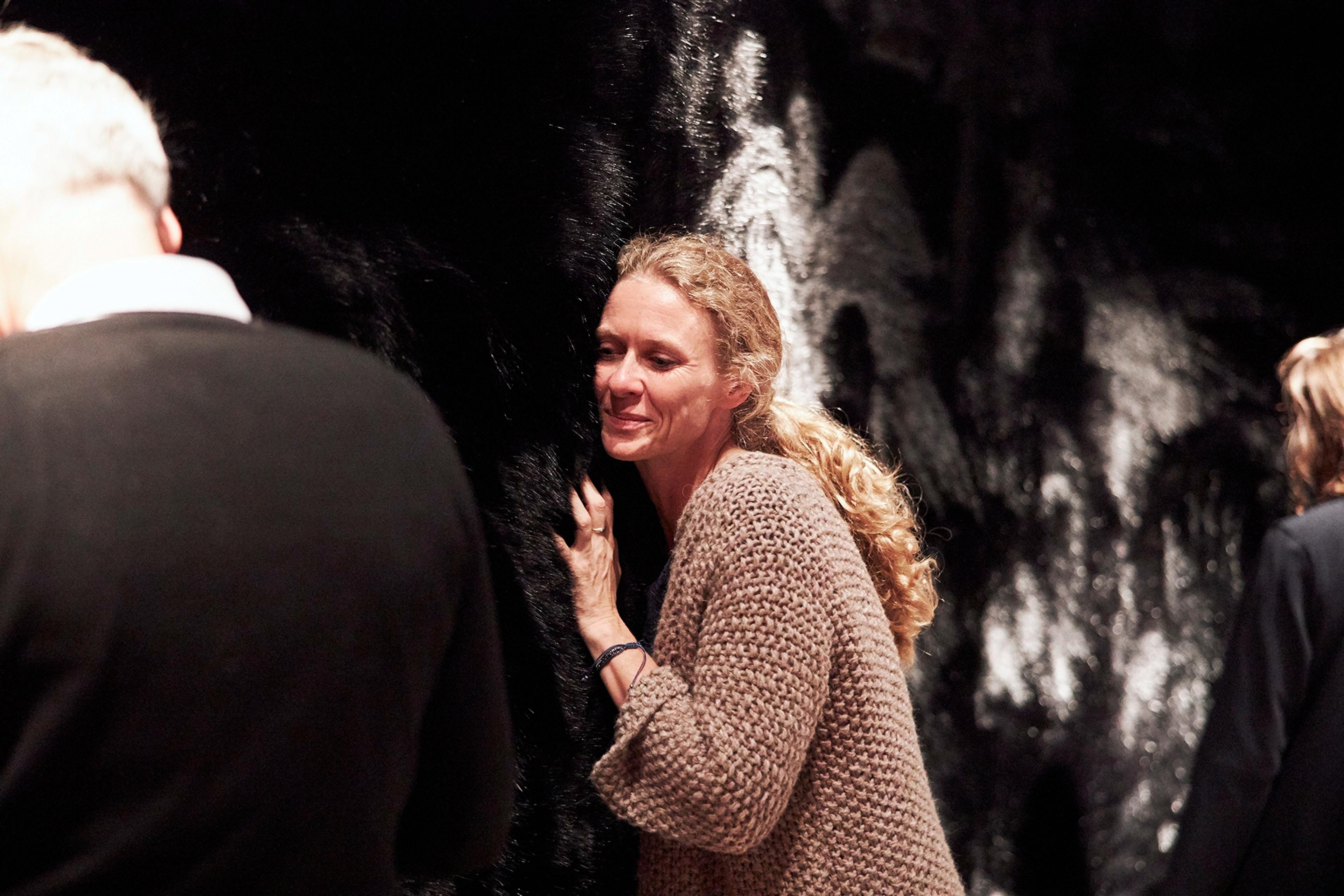
Touch as language Tactile Orchestra & Kozie
Tactile Orchestra is a large, fur-like surface that produces sound when stroked. Different areas, pressures, and movements through the texture create different frequencies, a layered soundscape that shifts with each touch. Everyone who reaches toward it becomes a player. Organically, human connection appears, strangers unconsciously form an orchestra together.
The installation has been part of re’SOUND at HERO, Rockefeller Center’s immersive art space, since September 2025. Thousands of people have paused, hesitated, reached toward it, connected and stayed longer than they planned. What the work consistently revealed: without any instruction people began to listen and tune into each other.
Kozie might be a much smaller scale, but not the impact. A pillow that responds to touch with sound, designed for people living with dementia. For whom the feeling of home can no longer be created through memory or conversation alone. Personalised with a loved one’s voice or a song from childhood, It offers connection without words. Language and memory may be fragmenting but touch is still fluent.
Kozie shows that connection not always requires a common language, in the life of someone with dementia, something simple like a pillow became a new way home.
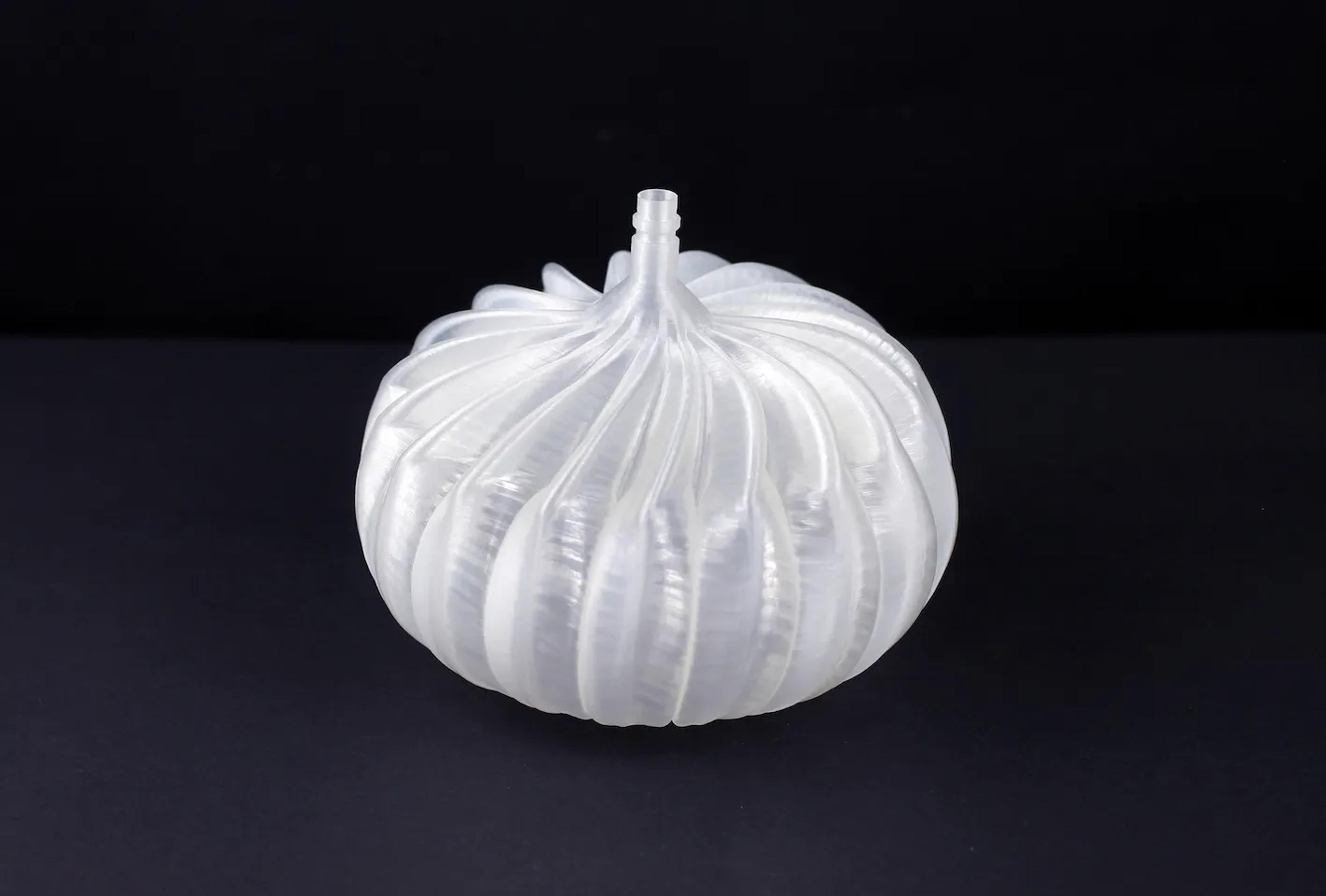
Material as care Aera Fabrica
Aera Fabrica is a material technology developed at Fillip Studios. The principle: by heating a 3D-printed shape, it becomes flexible and can be transformed. When cooled down it holds its new form, when reheated it will return to its original shape.
This ability to transform shape, led directly into a collaboration with Radboud University and Zuyderland Hospital. Pelvic organ prolapse affects up to 50% of women at some point in their lives and is still largely addressed with devices that haven’t fundamentally changed in decades. Standard pessaries come in fixed sizes. The body is expected to fit the device, not the other way around.
With the material knowledge from Aera Fabrica, we started co-developing an inflatable pessary: a device that could be introduced in a made-to-measure form and adapt once in place. The creative practice that began with making sound tangible was now making medical care more responsive to the body it serves.
The most intimate healthcare devices are often the least designed. When material innovation starts from a place of curiosity rather than convention, care itself can become more human.
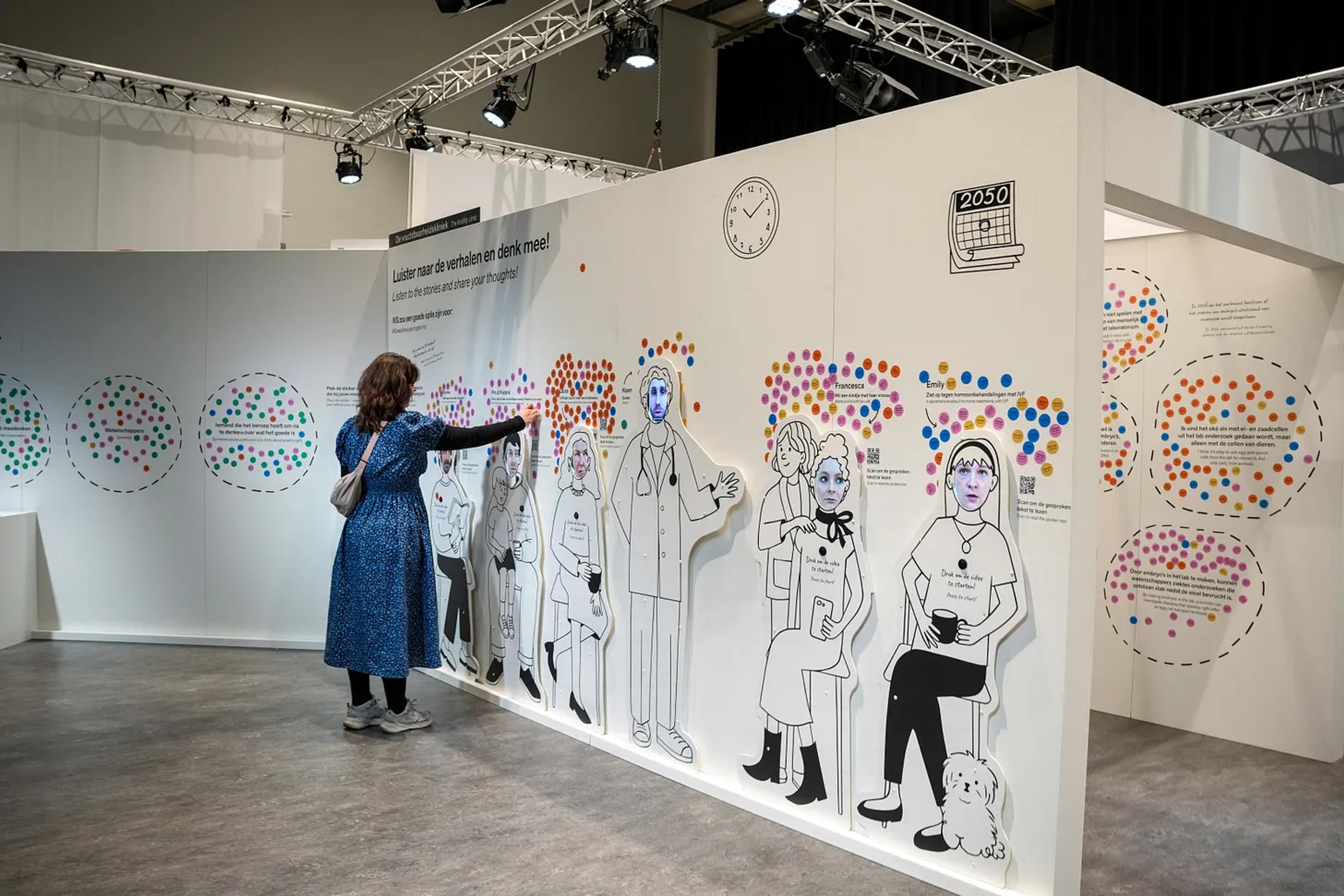
Participation as dialogue Baby of the Future
In Vitro Gametogenesis is a technology on the horizon that could allow scientists to grow egg and sperm cells from blood or urine. Cells that could eventually grow into a baby. This breakthrough would mean anyone could have a child: young or old, sick or healthy. A profound question that demands thoughtful public engagement.
We were asked to design an exhibition that makes that question tangible. Baby of the Future moves visitors from a lab, into a fertility clinic and pharmacy. The walls start white. By the end, they are covered in coloured stickers; visitors’ responses to statements about life, parenthood, and science. The space becomes a living portrait of public sentiment.
Here, the Embodied Immersive Experience is not about sound or touch. The simple invitation to place a sticker on a wall, transforms a spectator into a participant in the conversation. Participation makes opinion visible, and let a room full of strangers discover they are in dialogue.
The hardest conversations in care, cannot be conducted through information alone. When people are invited to physically participate in a question rather than intellectually consume it, the quality of the dialogue changes.
The body knows
Very different projects with the same message through all of them; including the body increases connection and understanding.
We believe that the deepest forms of care, connection, and understanding are already available to us. Inviting the senses next to language allows for a deeper understanding.
In a world where loneliness is a public health crisis and hospitals are forced to ‘process’ patients as quickly as possible, different approaches to human experience are urgent. Design is a powerful
If you work in healthcare, research, or cultural programming and recognise something of your own questions in this work, we would like to hear from you.