Thuis: A visual identity that evolves with the project

Project Thuis is a two-year research project exploring what it takes to feel at home in a public space. Our consortium brings together Fillip Studios, a contemporary dance company, a social design studio, and academics from two universities. Each partner interprets “home” through their own expertise and experience, as a body, memory, space, or connection. We are purposely playing with this complex question first, without rushing to a solution.
Visual design
Visual identities are usually based on a story, a belief or a value. For this project, we don't know what the story will be yet, so we decided to embrace that fact. Early on, we set out to create a fluent identity; one that can grow and develop based on the evolving of the project.
Within the Thuis consortium, we work with an interdisciplinary team, with different expertises. From dancers, to makers, to thinkers, all using different approaches to study the same topic. Everyone brings different knowledge and inspiration, inviting cross-pollination which leads to surprising outcomes. To give project Thuis a visual identity without a set outcome, Idil and Jonne from Team Visual collaborated with Head of Inspiration Minouk. A note from them:
“The first thing we did was stop and take a step back. Instead of outlining design directions, we started doing analogue experiments. Working more intuitively, we held a workshop with the consortium to surface what each of us actually carried when we heard the word thuis, and when thinking about our research consortium. The contradicting and deeply personal outcomes proved that capturing the meaning of such a layered concept needs a custom approach.”
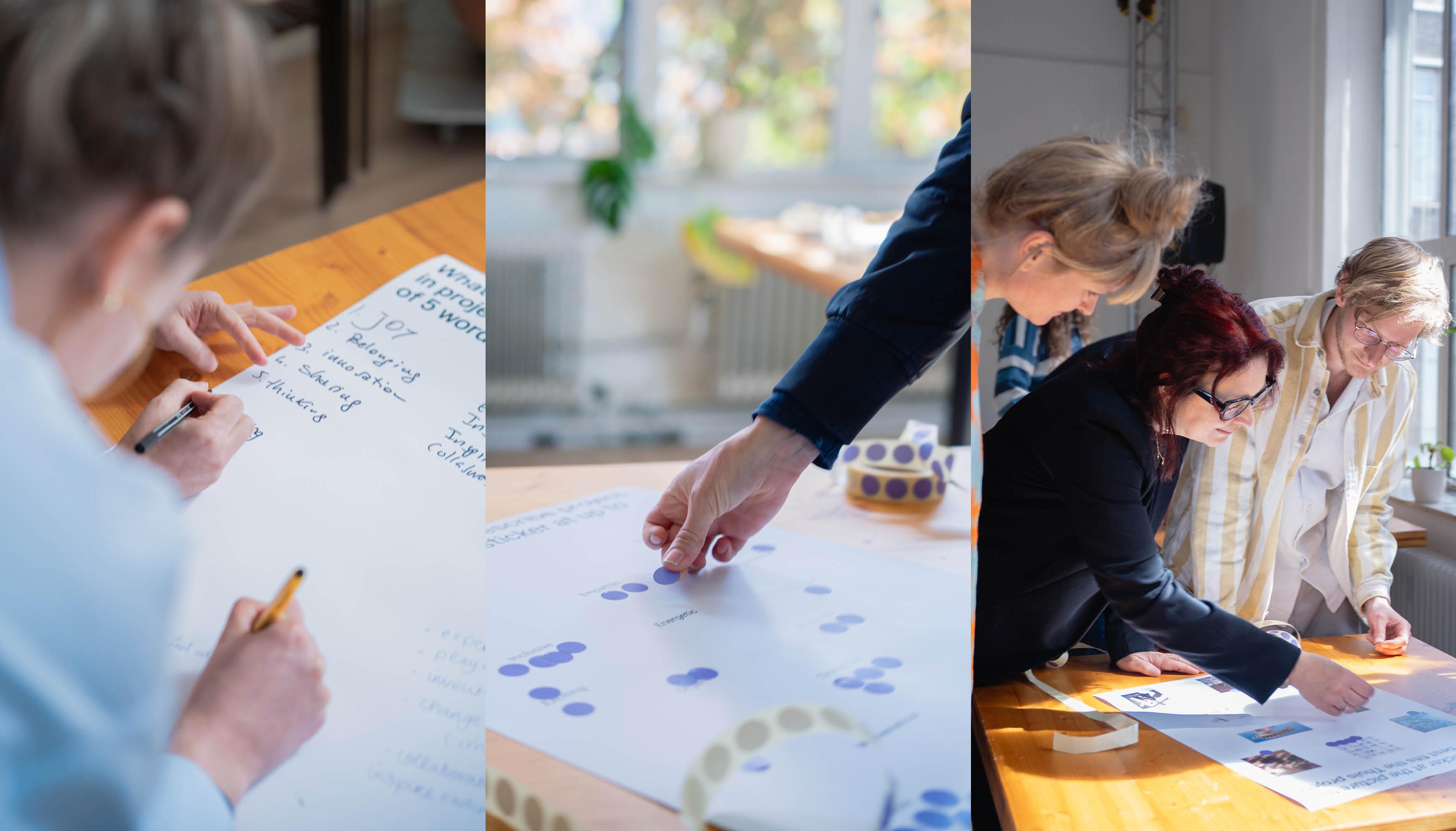
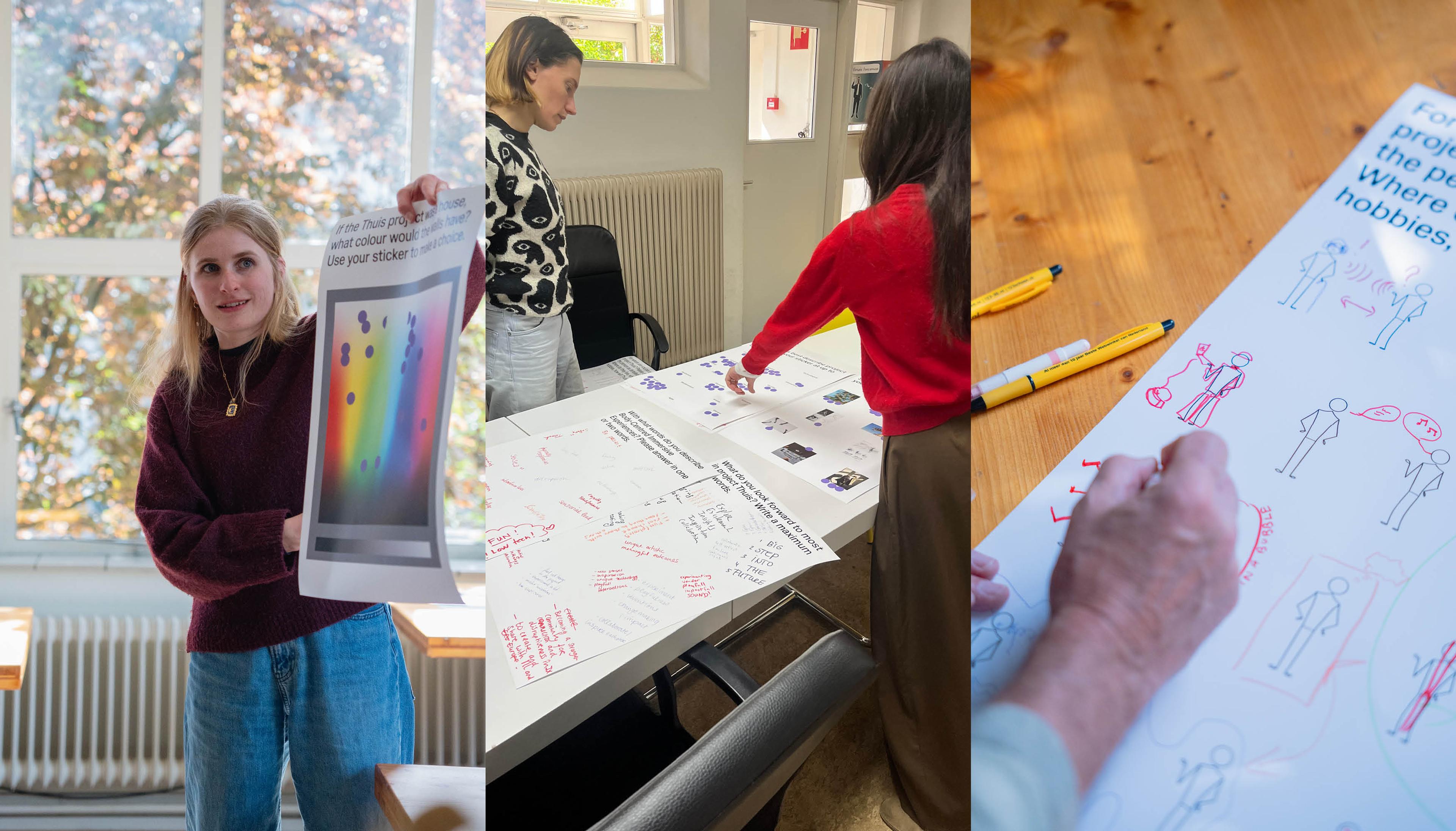
Workshop with the consortium to intuitively gather our associations with the project (and word itself) Thuis
Research
From all the input, we built a visual library of intuitively chosen images for how they handled composition, texture, colour, and space. Three themes began to emerge.
The first theme was spatial awareness. The images we kept returning to held a particular relationship between figure and ground. We were, for example, inspired by archeological visuals and how they make different layers of history visible in one image.
The second theme was movement and connection. The images that resonated most were those that caught something mid-motion; repeating elements, traces left by bodies, the suggestion of path rather than destination. Home, it turned out, was something we associated with movement more than with stillness.
One notion proved the most challenging: everyone associates differently with the feeling of Home. How do you grasp all of those different feelings, emotions and associations into something we can all resonate with? Well, that’s impossible. We decided to not even try to achieve that, but to work by embracing the unknown, even in our own process.
So, the third theme wasn't an image at all. It was the unknown, the fact that we didn't know how the project would end. The images that described that feeling were abstract, ambiguous, shapes that could be read multiple ways, forms that held open questions rather than resolved them. It was also about repetition, and trusting that something meaningful develops by spending time and repetition on it. Just like how the feeling of home tends to work: the spaces we move in on a daily basis become familiar. The same train you take, the bus driver you say hi to in the morning or the way you move through your supermarket.
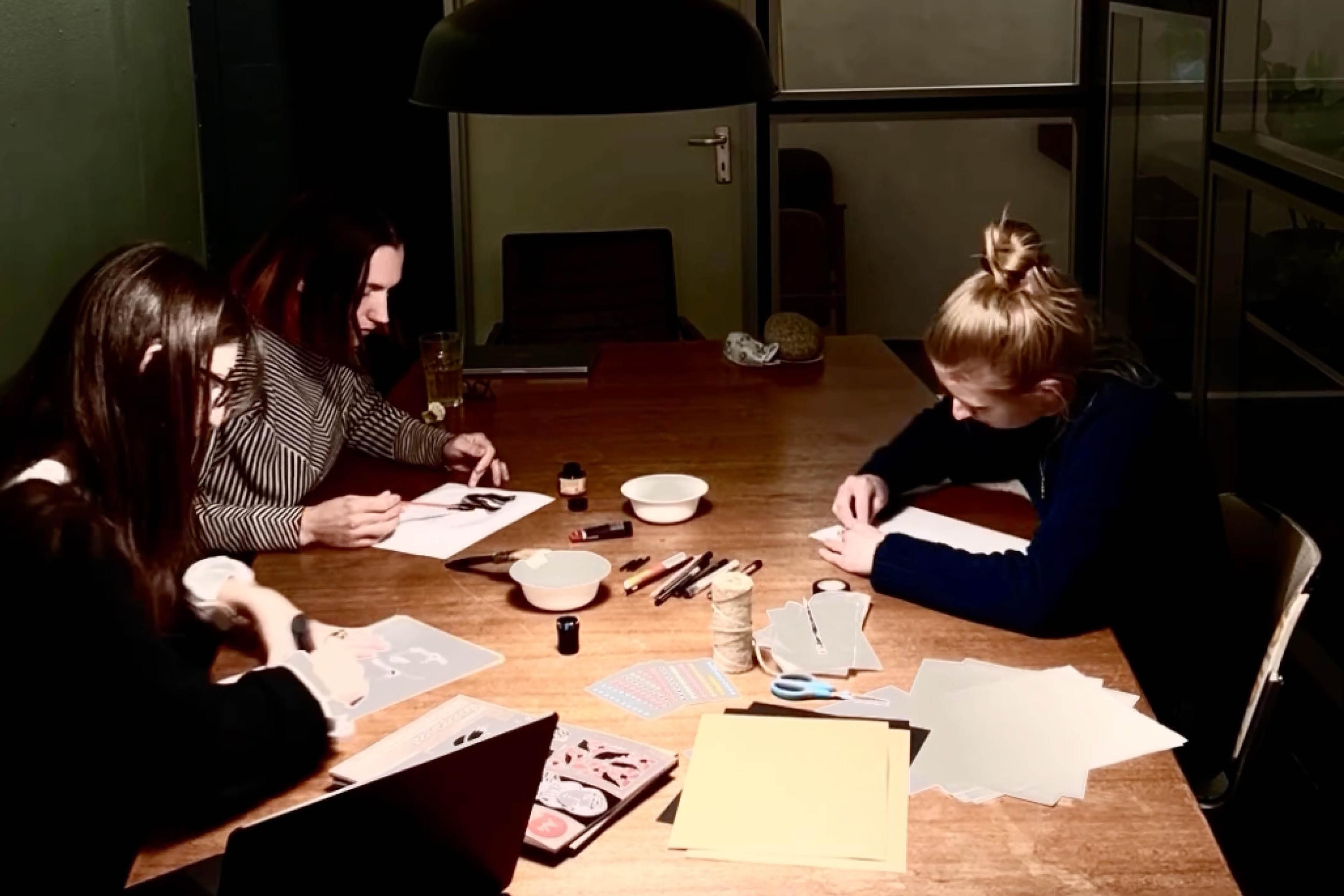
Analogue workshop
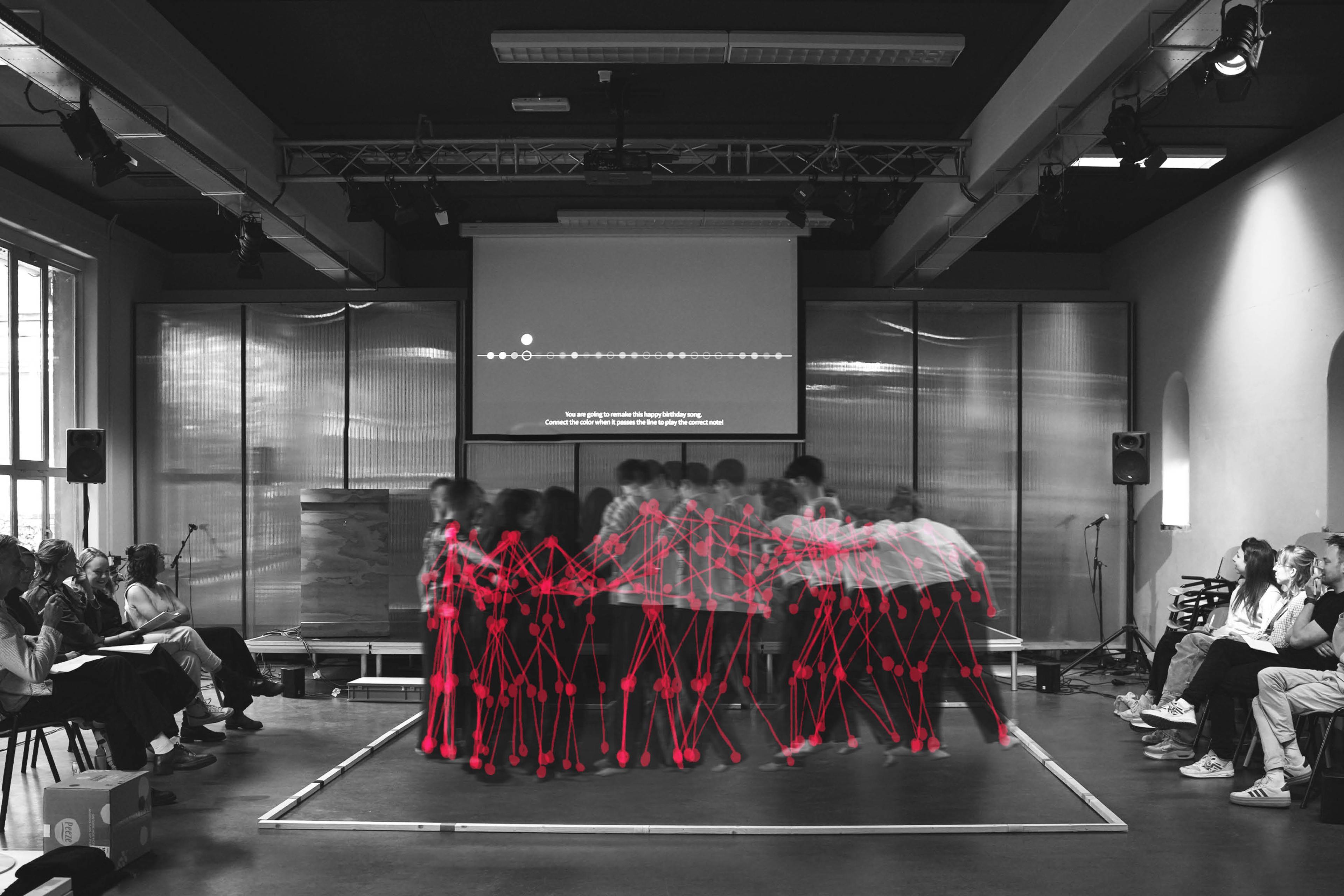
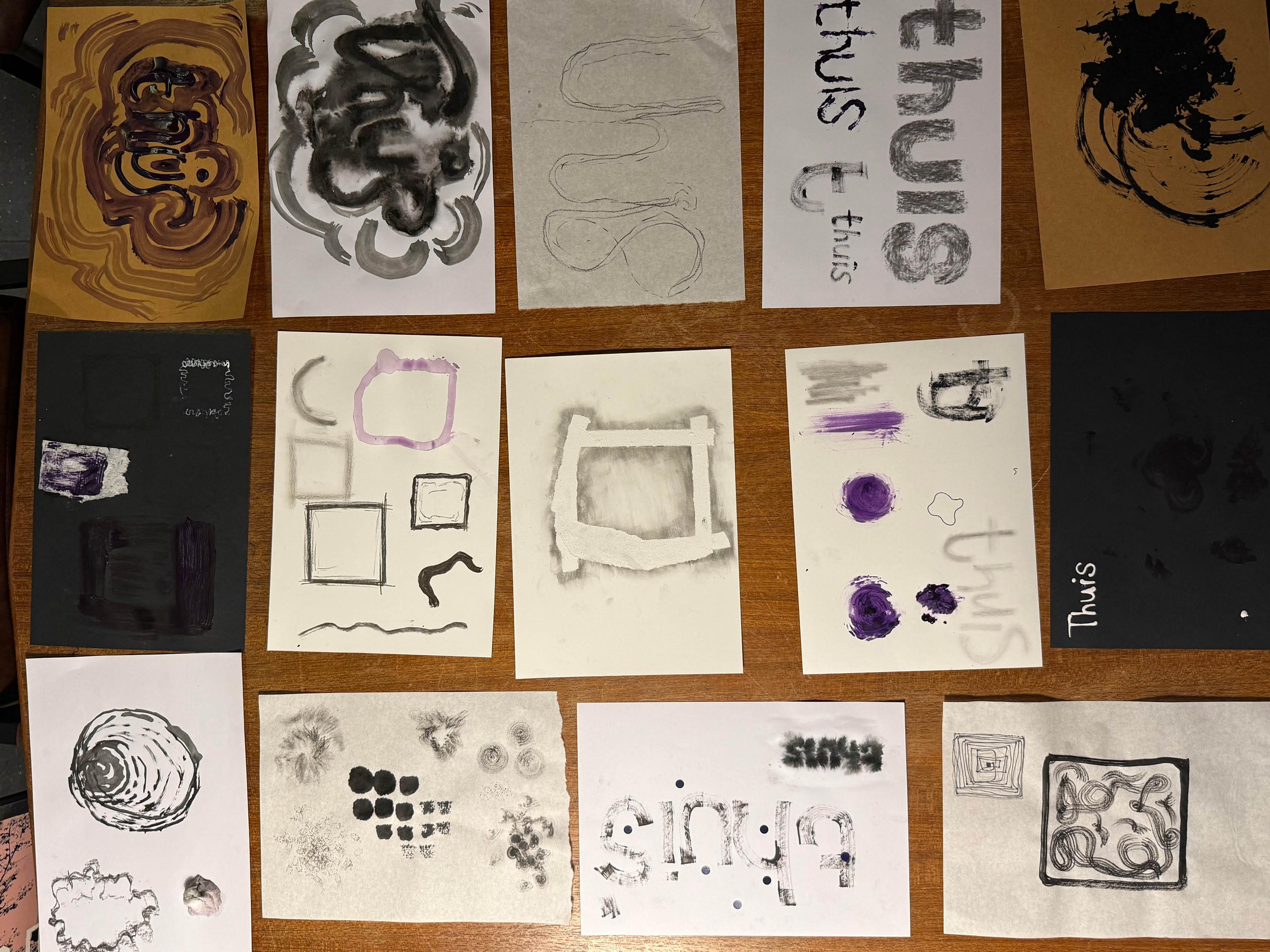
Visual experiment to analyze movement
Creation
Part of our research was also the visual experiments we were doing, both digitally as well as analogue. Not knowing the final outcome, we welcomed playfulness, an open outcome and tactility into our process. Planting seeds and giving them the space to grow. From our openness, we received input and revisited certain experiments.
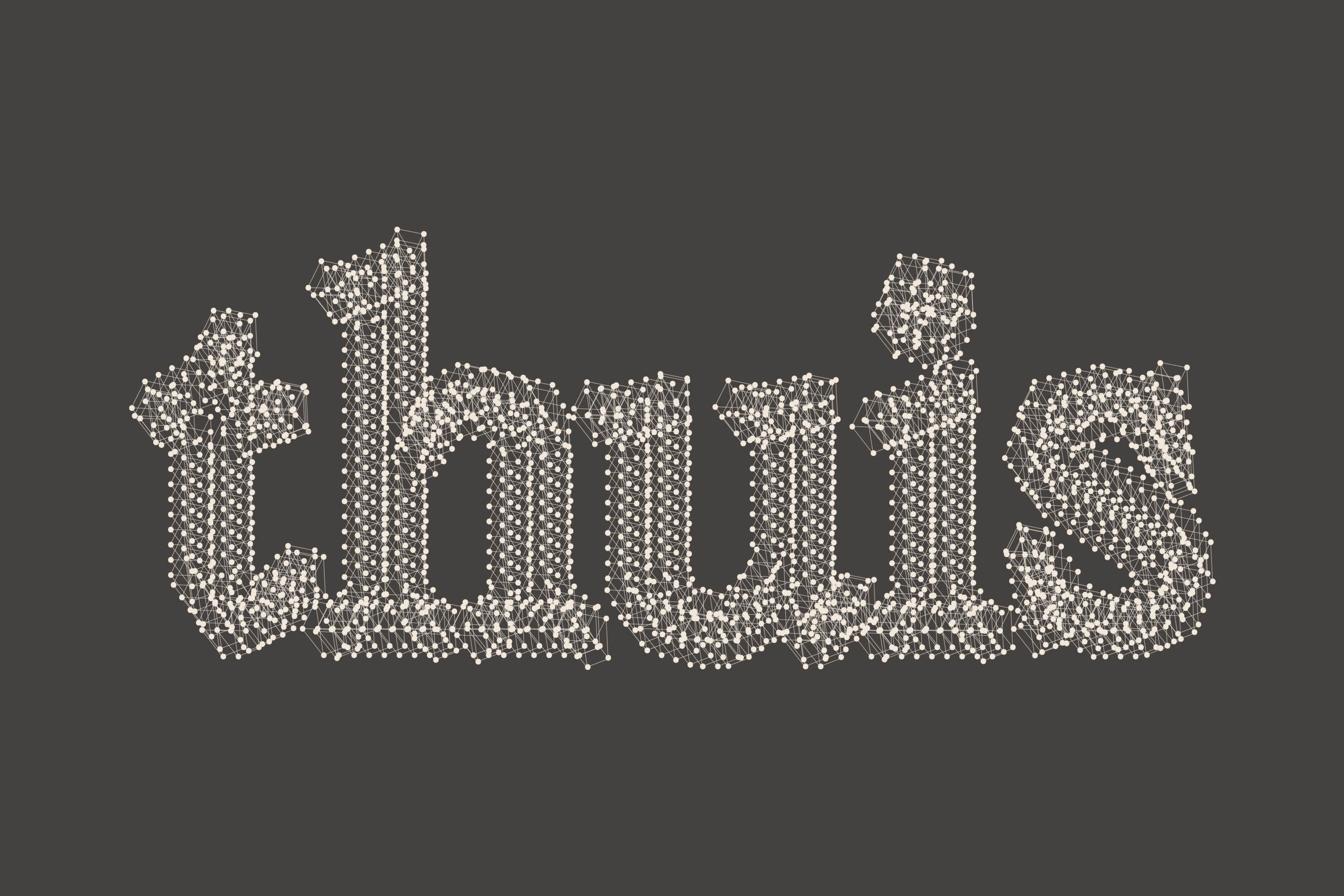
Kind of by (happy) accident, we came to the Thuis wordmark through one of these experiments. We had been trying to analyse movement by tracing the structure of it with lines and marks. The sketch we made wasn't intended as a logo, more an attempt to visualise what happened between people and space, and to grasp a fleeting movement into something that stays.
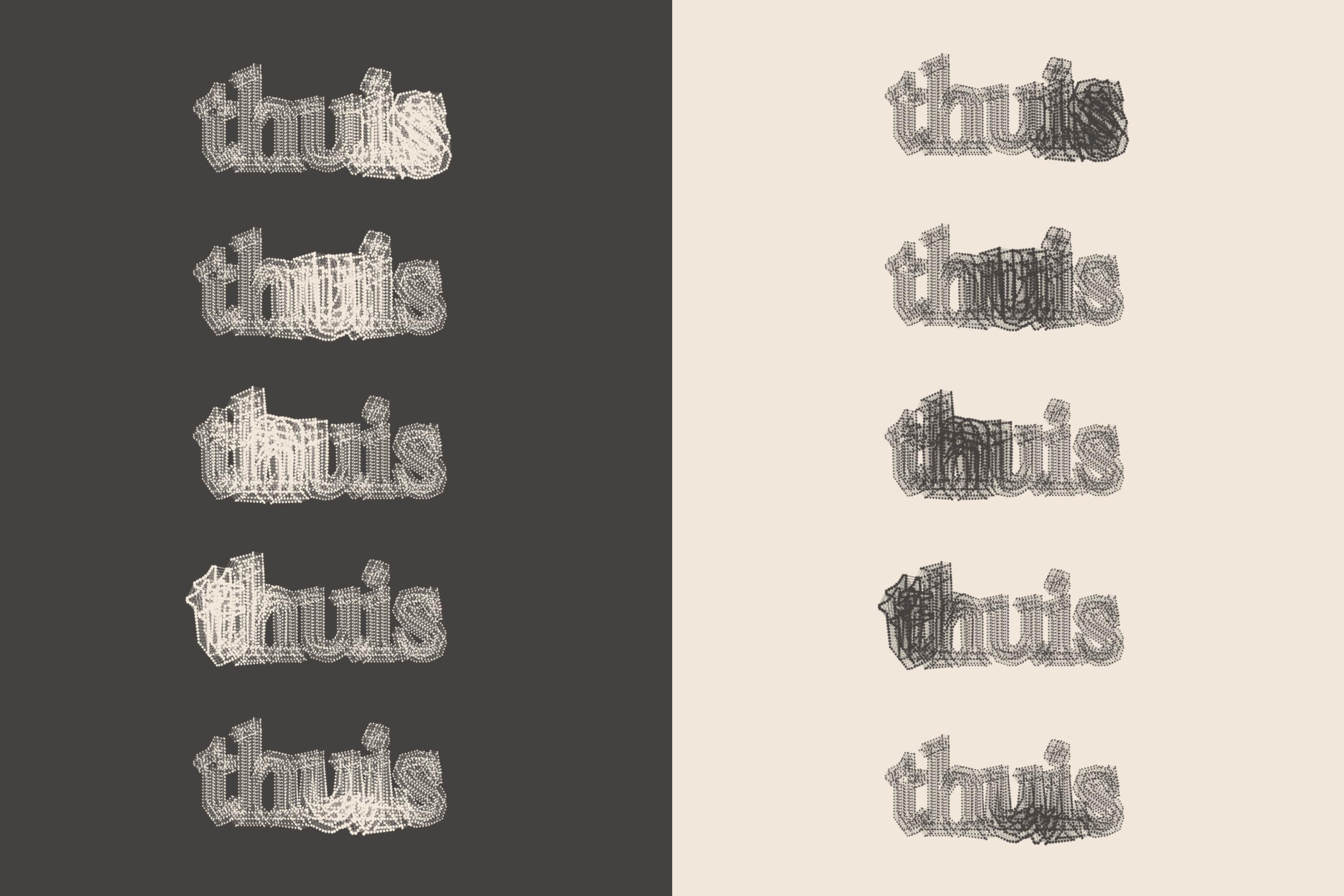
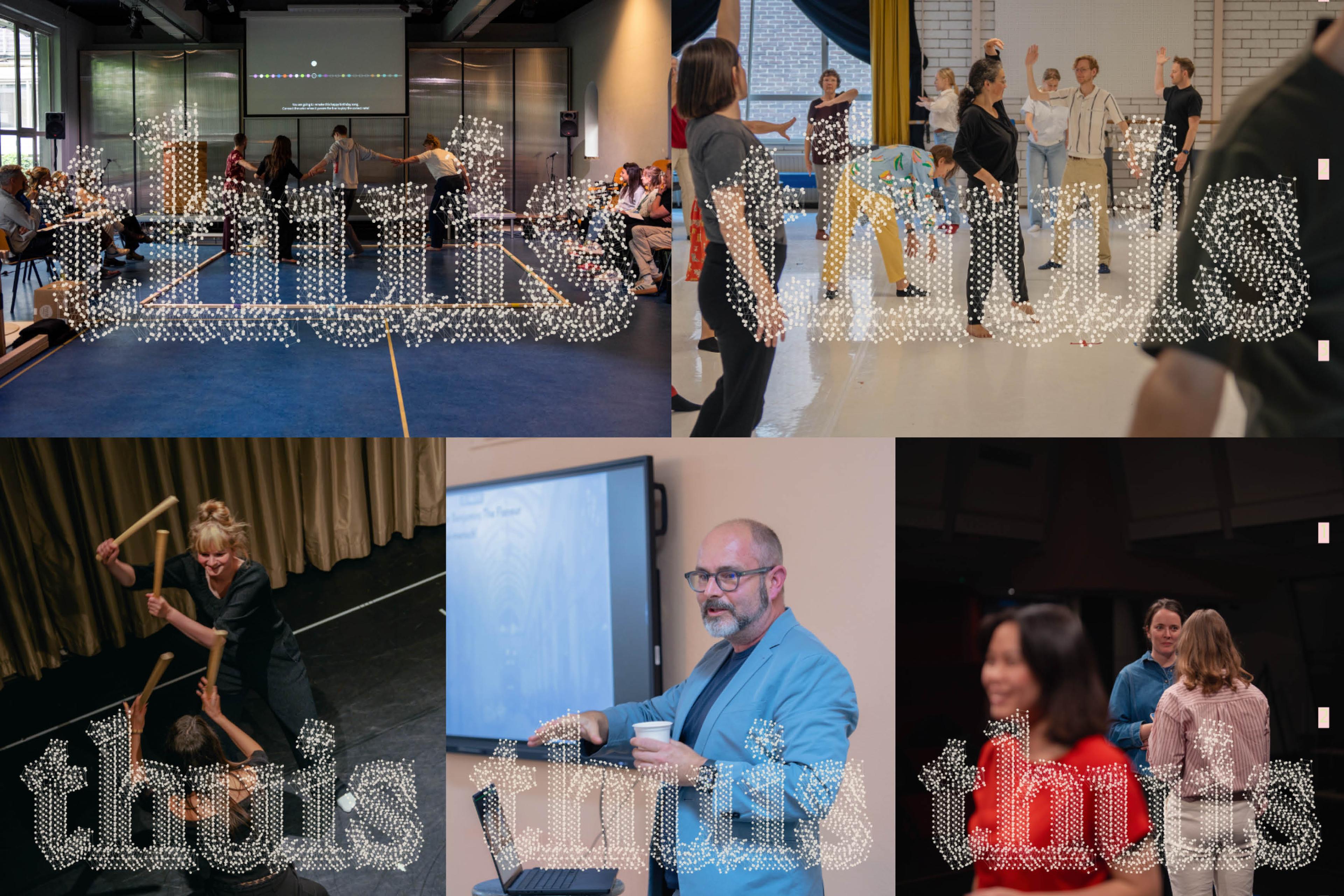
We recognised something that resonated and decided to play with it. By simplifying and adding repetition we built it into a typography. The different angles within the shape of the letters show different perspectives brought together and the three-dimensionality hints at the technical dimension of the research without announcing it. When you zoom out, the wordmark is soft, almost fuzzy. When you zoom in, it sharpens into something precise.
That felt right. Home at a distance is often vague and felt, up close it is specific, architectural, particular. The typeface we created reads like something cut out by hand, it has the tactile quality of something crafted rather than generated. For a project about sensing, belonging and connection, that fits.
We built the foundations of an identity with room to grow and develop. We don't know what the project will become, what phases it will move through, or what it will need to communicate next month, let alone next year. We do know what we are dreaming of together: creating something that will connect people, even strangers, and make them feel at home in the unknown. That dream to connect, presence of movement and slightly disruptive feeling, is exactly what the Thuis visual identity is all about.
Fillip Studios
This process reinforced something we return to often at Fillip Studios. The work of making something visible is not separate from thinking, we embrace making and experiment as a form of research.
In this case the identity emerged from sharing between team members. A sketch attempting to visualise thinking, not designing, turned out to be the starting point of something none of us had consciously proposed.
Project Thuis is ongoing. If you work in public space, social research, or spatial experience and if you recognise something of your own questions in this kind of process, we would like to hear from you! Reach out to our Head of Inpiration: minouk@fillipstudios.com .